
In the present, businesses are experiencing a paradigm shift, in which speed, flexibility and efficiency are not optional, but are necessary. Traditional infrastructure, typically expensive and slow to adapt, struggles to meet the growing demand for real-time insights and distributed processes. ScalerPi offers a new perspective to the table by combining edge computing and practical engineering. This enables solutions that can scale.
The main focus of this transformation is industrial automation using Raspberry Pi, which enables companies to think differently about how they design and manage systems. Businesses can put powerful light devices right in the data source, instead of relying solely on bulky, centralized hardware. This technique not only cuts down on time to respond, but also allows teams to respond instantly to changing conditions.
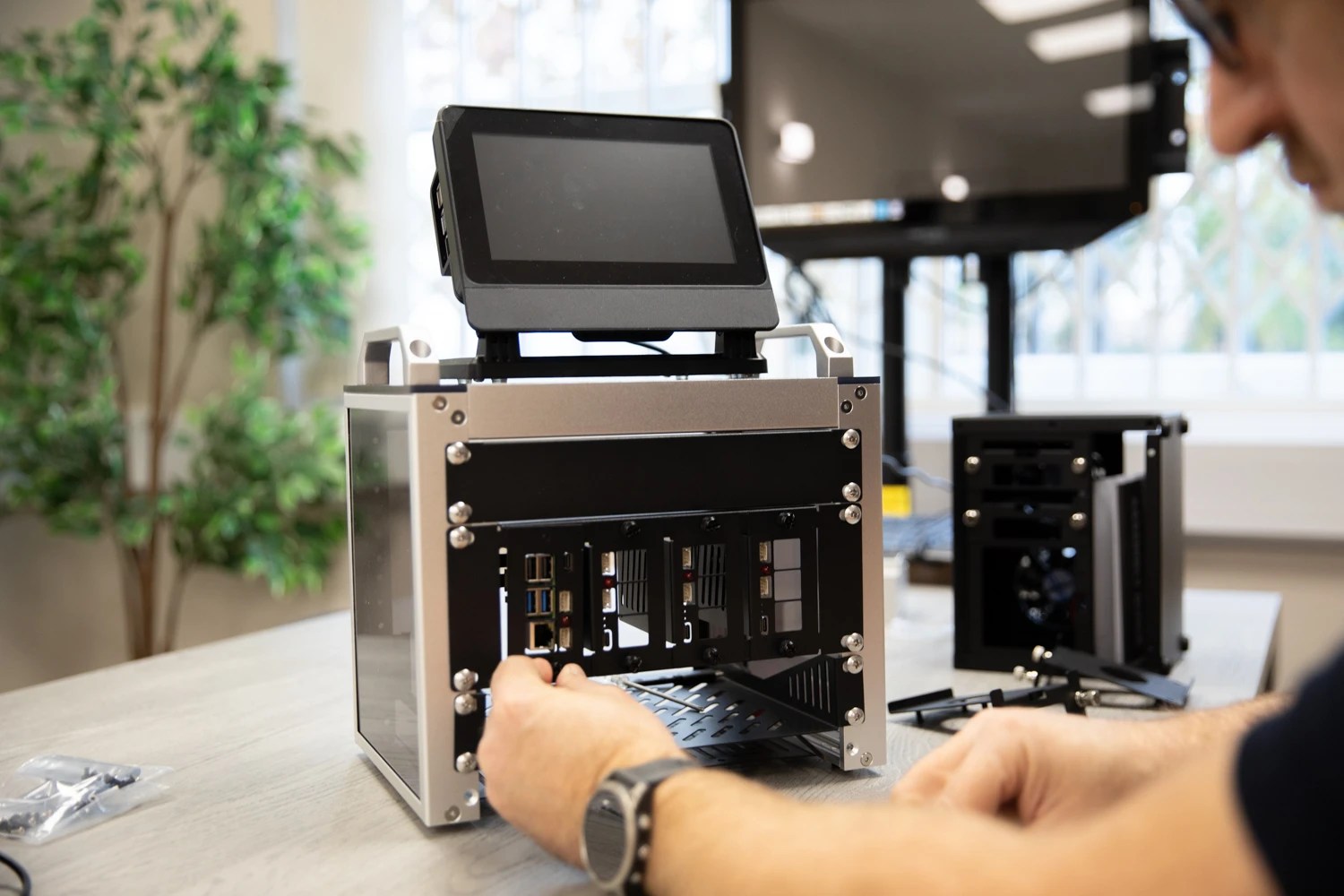
Data-driven Action at the Edge
Edge computing is a powerful technology that allows data to be processed locally. Waiting for cloud-based solutions to perform in various industrial environments is not practical. ScalerPi helps with this by offering infrastructure that is independent while integrating with larger systems when required.
The system would not be complete without the industrial Raspberry Pi IoT gate, which is the central interface between the devices and applications. It provides seamless connectivity between sensors, machines, and software platforms, assuring that data is transferred securely and efficiently. This allows for real-time monitoring of operations, early detection of issues, and consistent performance across sites.
For the logistics industry as well as monitoring of environmental conditions, this ability can be transformative. The systems can function even in areas with poor connectivity or in remote areas, ensuring operations and data remain available.
Compact Power for Demanding Environments
The problem with industrial computing is balancing effectiveness and efficiency. Although large servers offer great power, they’re often expensive, use a lot of energy, and are limitations in their flexibility. ScalerPi can overcome this problem with industrial Raspberry Pi servers that deliver reliable computing in a compact, energy-efficient form.
The servers were developed to function in real-world scenarios where space and power are limited. It doesn’t matter if they’re deployed in a manufacturing facility as well as a retail outlet or remote monitoring station, they deliver reliable performance without the need for a complex infrastructure. The modularity of their design allows businesses to expand their systems gradually, aligning the growth to actual requirements.
The compact industrial Raspberry Pi server module offers the same versatility. These servers, specifically designed for extreme conditions, feature robustness and high-end processing capabilities. They are suitable for applications that require continuous operation, such as smart city systems, industrial automation installations.
Flexibility Through Containerized Deployment
Containerization is a crucial element of modern infrastructure. ScalerPi integrates industrial Raspberry Pi docker environments to enable flexible and efficient application management. Docker lets companies build, update and scale applications swiftly without interrupting current processes.
This simplifies development, and guarantees consistency between deployments. This allows applications to be tested in one location and then easily transferred to another. This decreases the chance of errors and increases overall reliability. This degree of control, that is vital for businesses with multiple locations is extremely beneficial.
Containerization supports innovation. Teams can test new products and services without having to affect the current systems. This makes it easier to keep at the top of their game.
Practical Solutions Across multiple sectors
ScalerPi is an extremely powerful tool because it can adapt to a variety of industries. Industrial automation with Raspberry Pi assists in reducing downtime, boost efficiency and allows for predictive maintenance in manufacturing. Machines are able to communicate and exchange data, creating an intelligent and connected manufacturing environment.
In the field of agriculture, edge-based technologies help farmers adopt smarter practices for farming. Sensors can monitor crop health and soil conditions. They can also monitor the weather patterns.
The ability to monitor customer behavior in real-time is advantageous to the hospitality and retail sectors. Businesses can streamline their operations while improving customer satisfaction. From digital signage and queue management, to the use of digital signage, businesses can use it to improve customer service. In the meantime, projects in the public sector like smart cities depend on advanced infrastructure for tasks like monitoring environmental quality and asset tracking.
Connecting Hardware and Cloud with Confidence
What makes ScalerPi stand out is its ability to bridge the gap between physical devices and cloud-based systems. Combining hands-on hardware experience with cloud-based practices that are modern, creates a platform that supports local processing, as well as central management.
This method allows companies to grow without difficulty. Whether starting with a small deployment or scaling up to thousands of devices, the infrastructure is accessible, secure, and efficient. Flexible pricing and transparent pricing help to simplify the process. Organizations can focus on innovation rather than operating issues.
A Future-Ready Strategy for Industrial Technology
As the world of work continues to change, the need for adaptable and efficient infrastructure will only increase. ScalerPi can be a solution which fulfills these requirements by combining edge computing power with Raspberry Pi technology.
Each piece of equipment, including industrial Raspberry Pi Servers, advanced IoT gateways and containerized apps is built to be scalable and useful. The result is an infrastructure that not only supports modern requirements but also prepares companies to meet the challenges of the future.